
Rocket
Summary
Rocket was a food delivery application that originated in Ukraine and operated across European countries. It facilitated the delivery of food items from nearby stores and establishments.
Year
2021
Role
UX Researcher
Scope
Full-cycle UX Research; insights delivering.
Context
As a part of the UX Research course at Projector Online Institute, our team embarked on a journey to improve the Rocket mobile app. Throughout this case study, we followed the double diamond framework, ensuring a thorough exploration of user needs and preferences.
The primary goal was to develop user archetypes and propose enhancements based on their existing behavioral patterns.
Research
Process
The research process was structured into four separate stages, not including the final presentation. Each stage helped us ensure that the direction of the work was aligned with solving a genuine problem, rather than just providing random insights.
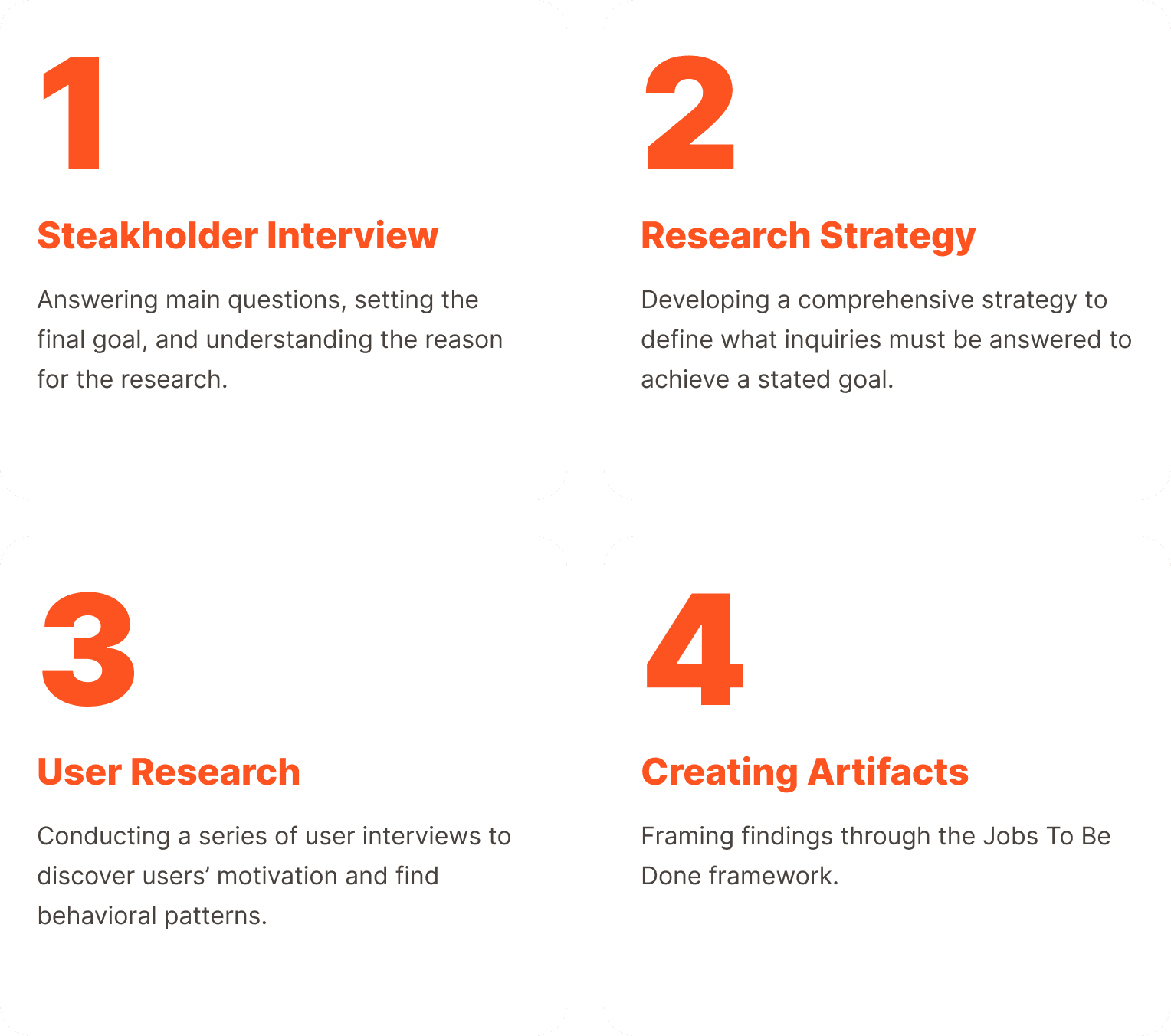
Stages of our research
Creating research strategy
The research strategy reflected a high-level goal stated as a How-Might-We question, research tasks, that we believed would lead us to this goal, inquiry questions that would fill the knowledge gaps, and research methods to explore user behaviors effectively.
During this phase, we spent the most time refining our list of inquiry questions, ensuring that we're clearly defining the purpose of the future research.
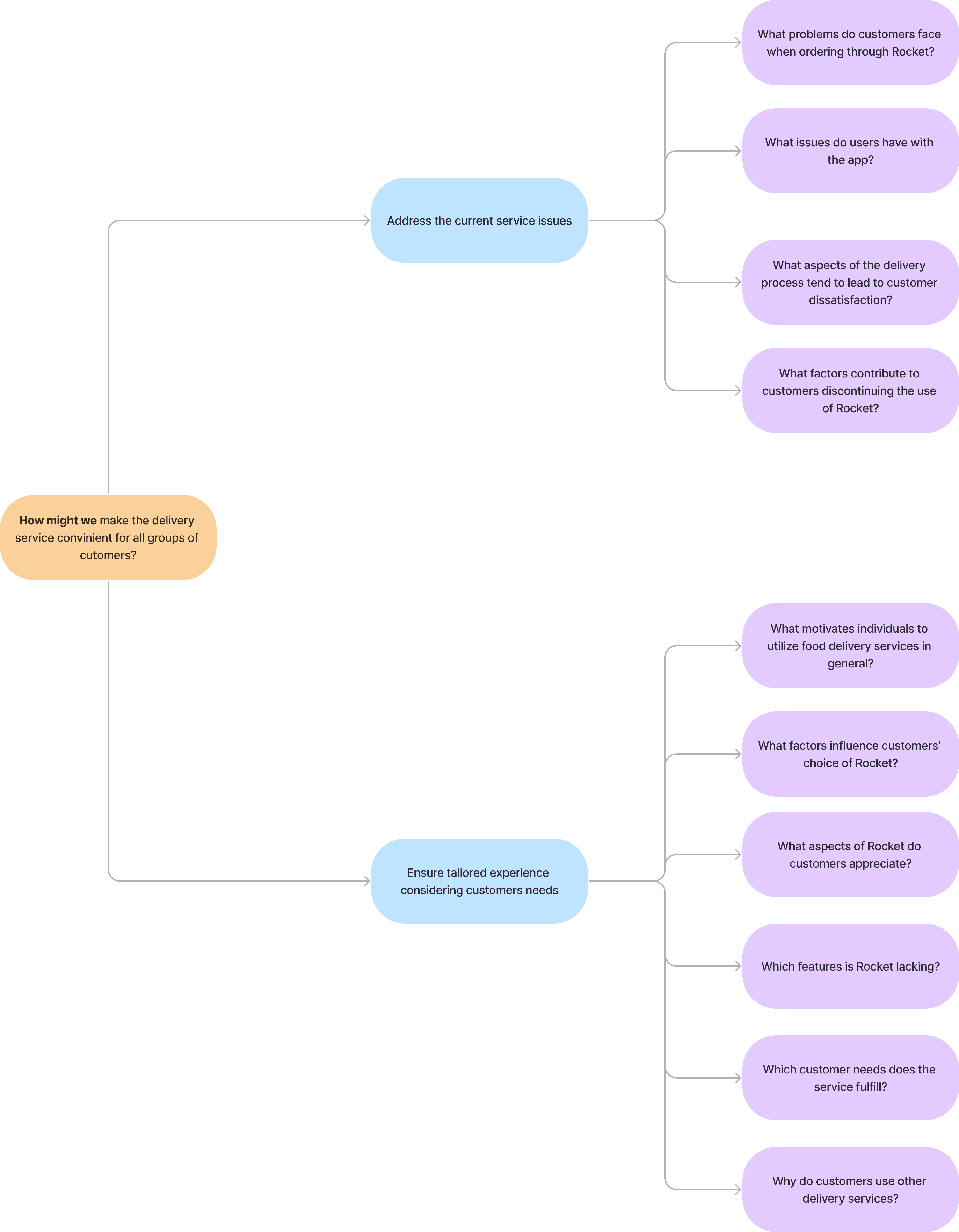
Research strategy
Conducting interviews
We utilized a variety of free resources, including Facebook groups and online communities, to recruit participants for the interviews. Aiming to identify specific patterns, we determined that a minimum of 20 interviews were necessary for our data to be considered valid and statistically significant. Although we managed to conduct only half of the planned interviews, the insights we gained were still quite meaningful.
To prepare for the interviews, we transformed our inquiry questions into interview questions, collecting them within a guide that directed our sessions with users.
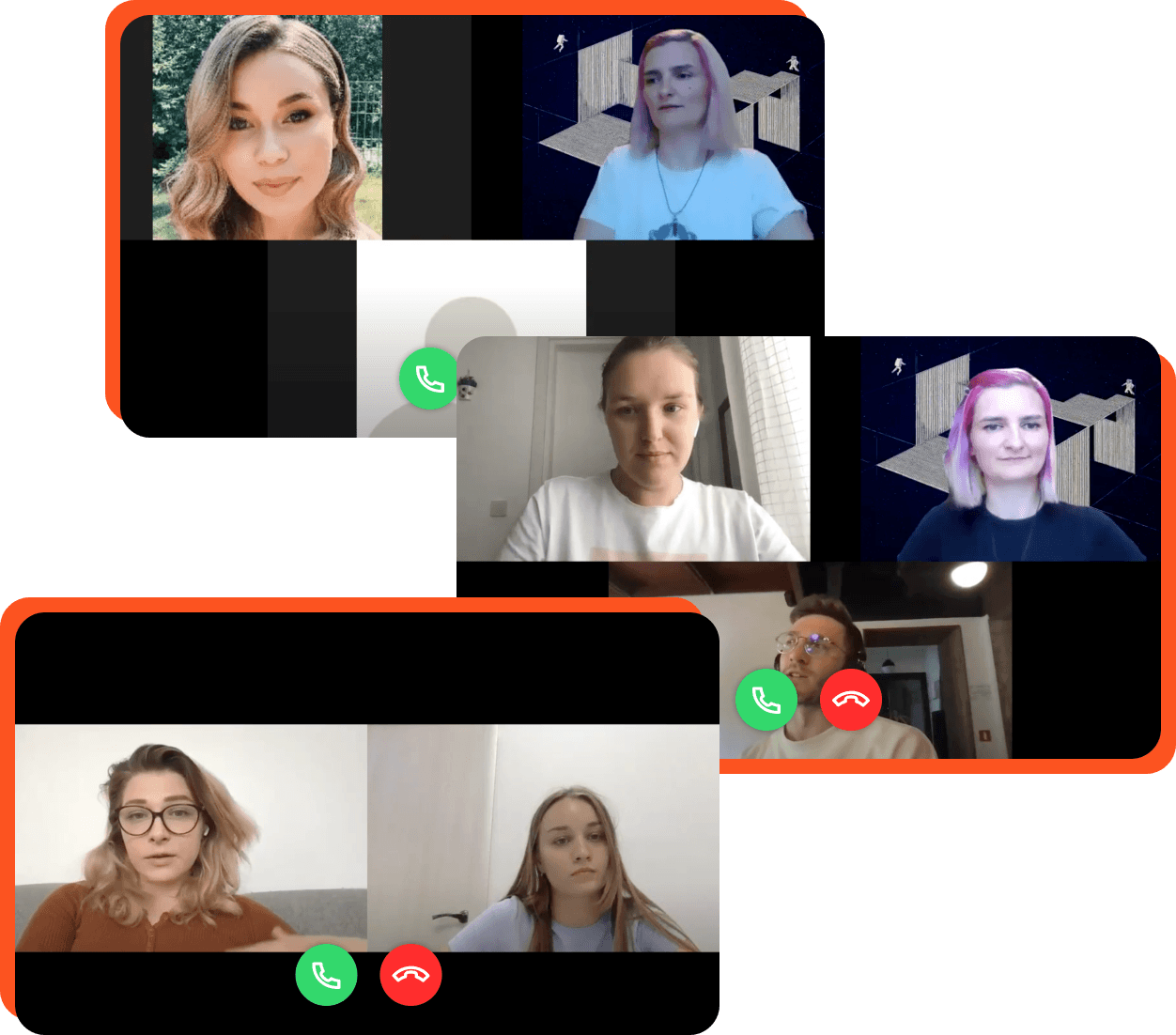
Sessions with users
The interview focused on a participant's experience either with Rocket App or with competitors. A single session took up to 40 minutes to conduct.
Working with the insights
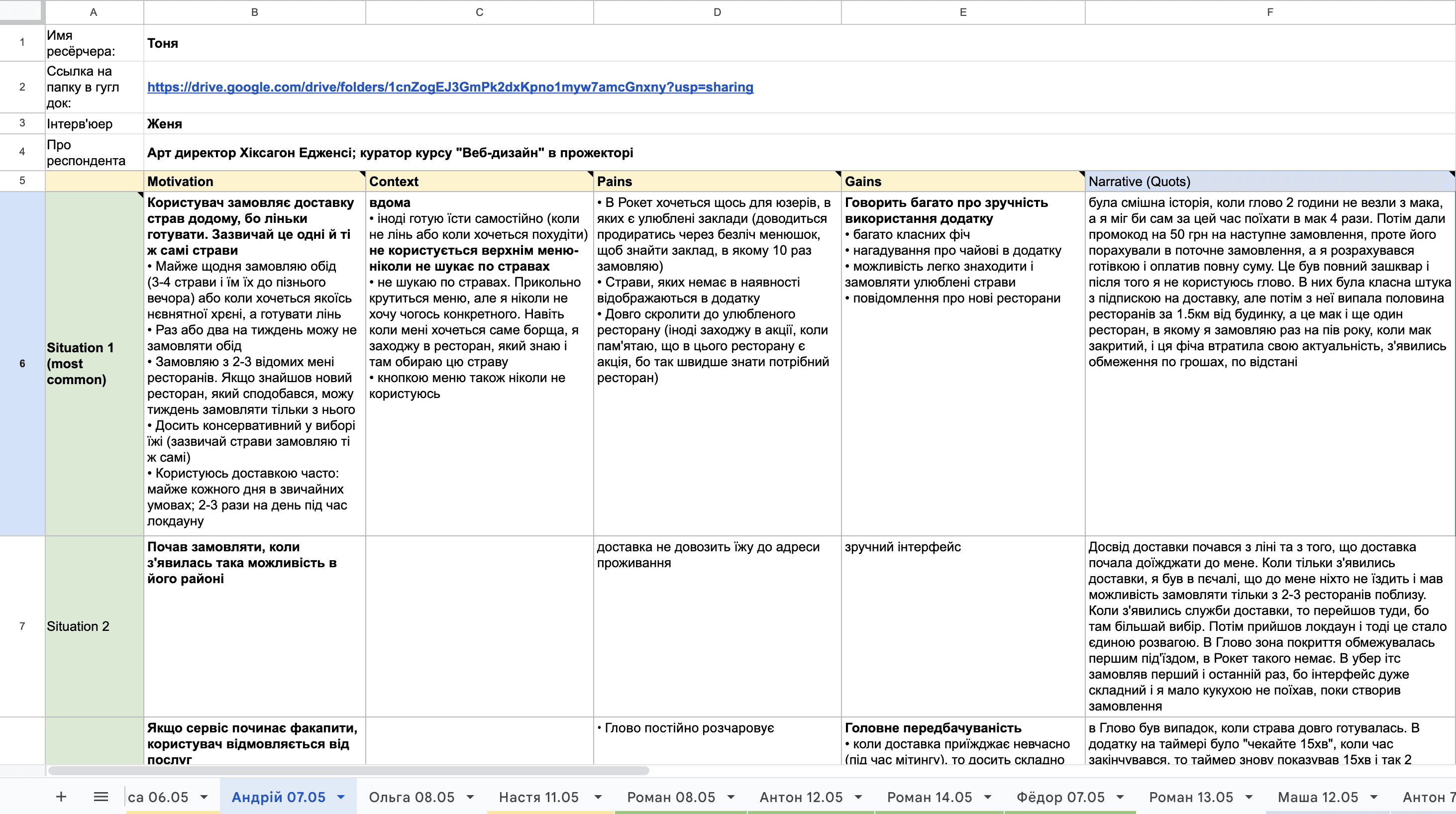
All findings were transformed into artifacts. To transcribe and categorize those insights, we structured all the findings within a single table, that contained such columns as "Motivation", "Context", "Pains", "Gains", and "Narrative" for additional notes.
This table organized all the information we got from the interviews, making it straightforward to align jobs with their respective archetypes.
Then, we went through all the table sheets looking for similar ideas and grouping them into jobs.
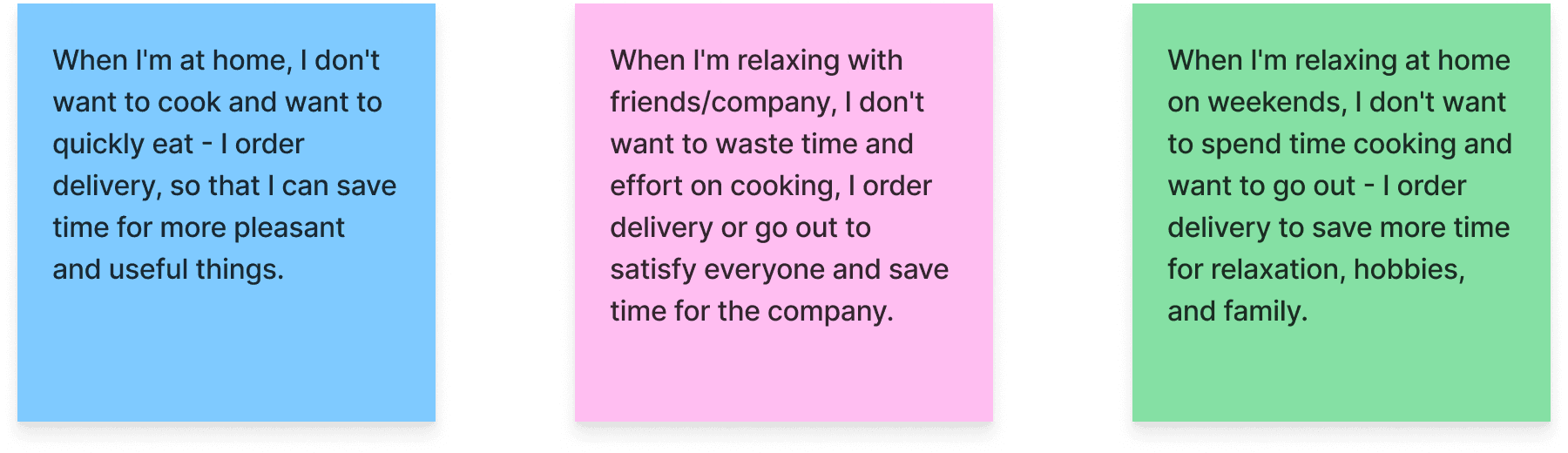
Jobs examples
Describing archetypes
As a result of analyzing our findings, we were able to distinguish 3 archetypes, that depicted specific behavioral patterns: The following list contains generic quotes that characterize each of them:
Slacker: "I don't cook because I don't want to and don't know how, that's why delivery is a great solution to satisfy my needs in eating!"
Workaholic: "When I'm buried in work and don't have much time for myself, I order delivery so that I can eat."
Spontaneous: "I love trying new food, whether it's while traveling or when a new restaurant opens. It's a pleasure to discover dishes and flavors that were previously unknown to me."
The Spontaneous archetype could acquire characteristics of other two depending on the context.

Slacker

Workaholic

Spontaneous
Thus, we focused on the context of delivery, both inner (in terms of motivation) and outer (in terms of the situation) to distinguish behavioral patterns one from another.
Key suggestions & conclusions
Archetypes enabled us to highlight important aspects by considering popular delivery scenarios, leading us to the following suggestions:
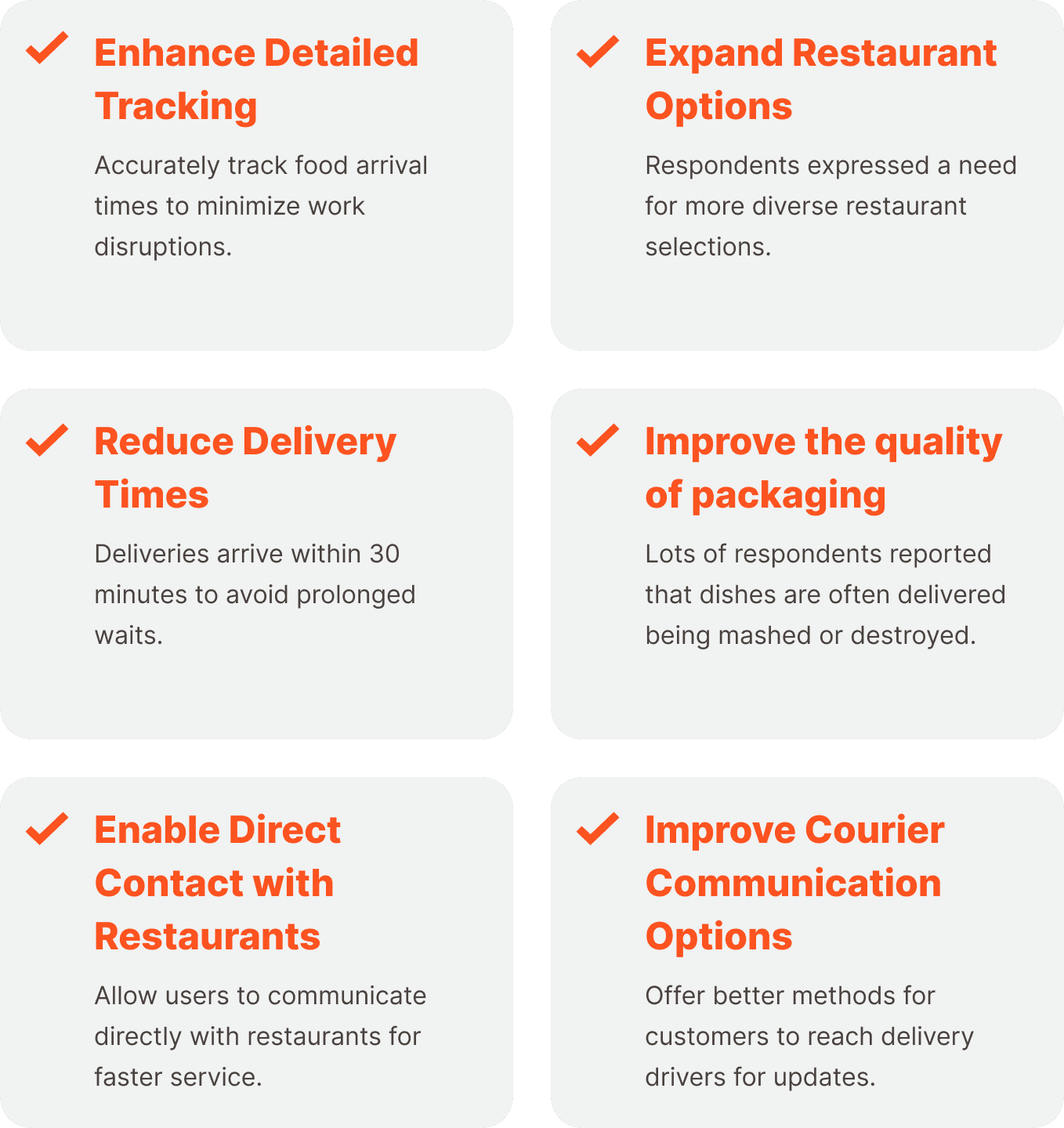
Suggestions
In conclusion, while archetypes are undoubtedly valuable tools for marketing and promotional strategies, their true power in product development lies in their ability to act as guiding stars for understanding and empathizing with the users a company serves. By leveraging archetypes effectively, businesses can gain deeper insights into user needs and preferences, ultimately leading to more resonant and impactful product development.